Quick Facts
| Case Detail | Information |
| Discovery Location | Slopes of Kholat Syakhl (“Dead Mountain”) in the northern Ural Mountains, Soviet Union. |
| Time Period / Date | February 1,–2, 1959 (Search operations concluded late spring 1959). |
| Famous Victims | Nine experienced Soviet hikers led by Igor Dyatlov. |
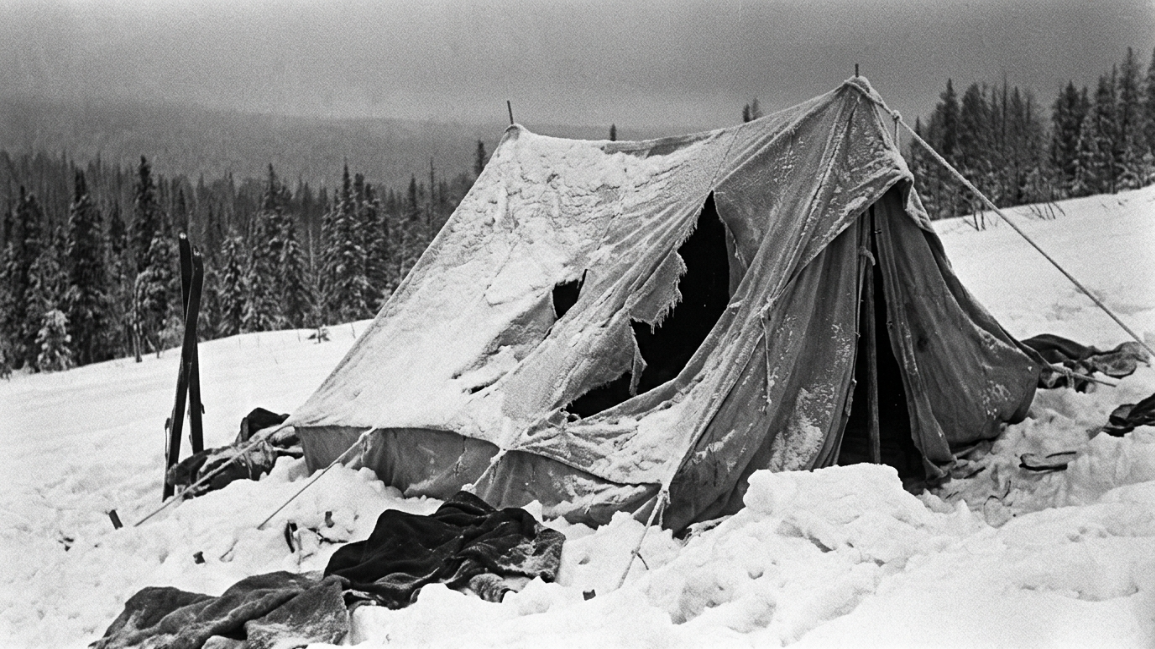
| Condition of Camp | Tent cut open from the inside, gear abandoned, and footprints leading into a blizzard. |
| Primary Trauma Profile | A mix of severe hypothermia and massive internal, non-impact crushing skeletal injuries. |
| Historical Significance | One of the twentieth century’s most enduring wilderness mysteries, fueling decades of conspiracy theories. |
Introduction
The February 1959 deaths of nine experienced Soviet hikers on the slopes of Kholat Syakhl in the Ural Mountains remain a foundational paradigm of global wilderness anomalies. Led by Igor Dyatlov, the group cut open their tent from the inside and fled into a sub-zero blizzard without their boots or heavy winter clothing. When search teams recovered the remains weeks later, they documented a terrifying mix of trauma: several hikers died simply of hypothermia, while others sustained massive internal skeletal crushing injuries comparable to a high-speed car accident, yet lacked any external soft-tissue bruising.
For generations, this vacuum of information fueled folklore of secret Soviet military weapons testing, local indigenous ambushes, and extraterrestrial interventions. However, the introduction of modern thermodynamic models, biomechanical impact simulations, and snow taphonomy has systematically reframed the tragedy. A rigorous Dyatlov Pass incident forensic analysis reveals that the hikers were brought down entirely by an unyielding cascade of rare environmental forces.
What makes this mid-century cold case an exceptional focus for contemporary scientific review is the precise interaction between topography and human physiology. By shifting away from sensationalized urban legends and analyzing the mechanical friction of slab snow avalanche dynamics, the precise orientation of internal chest fractures, and the behavioral realities of terminal paradoxical undressing, researchers have successfully reconstructed the final hours of the Dyatlov group.
Why the Camp Layout Triggered a Delayed Slab Avalanche
The primary historical objection to an avalanche causing the tragedy was the lack of visible debris at the scene, coupled with the steepness of the slope, which sat at an angle under 30 degrees—a trajectory traditionally considered safe from snow releases.
To re-evaluate this baseline assumption, forensic engineers and avalanche simulation experts conducted a detailed topographical audit of Kholat Syakhl. The hikers had made a critical structural mistake: they cut a deep, vertical notch directly into the snow slope to shield their tent from the high mountain winds.
-
Destabilized Snowpack: This cutting action destabilized the structural integrity of the upper snowpack.
-
Wind-Driven Loading: Over several hours, heavy winds deposited immense layers of dense, heavy snow onto the slope above the campsite.
-
The Delayed Release: The combination of the deep notch and the added weight triggered a delayed slab avalanche. A dense sheet of compacted, icy snow slid down the mountain, burying the tent in a matter of seconds.
-
Debris Masking: Because it was a compact slab release rather than a massive, rolling powder avalanche, it left minimal visible debris trails for early searchers to identify weeks later, explaining the total lack of obvious avalanche markers.
Timeline of the Incident and Search
-
January 23, 1959: The Dyatlov group begins their multi-week ski trek across the northern Urals.
-
February 1–2, 1959: The group pitches camp on Kholat Syakhl and is struck by a localized environmental crisis overnight.
-
February 26, 1959: Search pilots locate the abandoned, damaged tent; the first five bodies are recovered shortly after.
-
May 1959: The remaining four hikers are discovered under deep snow layers inside a nearby ravine.
-
2020–Present: Advanced computational engineering models formally validate the mechanisms of small-scale slab avalanches.
Biomechanical Load Simulations and Non-Impact Internal Trauma
The most terrifying mystery of the case was the presence of massive internal injuries on Dubinina and Zolotaryov. Both victims suffered extensive bilateral rib fractures and internal hemorrhaging, yet their skin showed zero scratches, lacerations, or external bruising.
To decode this specific pathological profile, modern biomechanical forensic scientists ran computational impact models using automotive crash-test software. The simulations subjected virtual human models to the exact weight, density, and velocity of a compacted slab snow release.
The data proved that if individuals are caught sleeping flat on their backs on a hard frozen ground surface, a sudden falling block of heavy, compacted snow exerts immense compressive force across the chest cavity. This pressure causes immediate internal structural failure, cracking the ribs and compressing internal organs without breaking the flexible outer skin layer. The resulting injuries are identical to the high-force crushing trauma seen in high-speed traffic collisions, proving that the hikers’ internal injuries were caused by mechanical snow burial rather than external military weapon impacts.
Paradoxical Undressing Mechanics and Hypothermic Disorientation
When search teams recovered the first five bodies near a large pine tree down the slope, they were shocked to find the victims dressed only in underwear and socks. This detail convinced early investigators that the group had been driven out of their camp by a terrifying supernatural force.
In modern forensic pathology, this behavioral phenomenon is thoroughly documented as paradoxical undressing. When a human body enters the terminal phase of severe hypothermia, the brain’s internal temperature regulation center malfunctions.
The blood vessels in the extremities, which had tightly constricted to keep warm blood pumping to the core organs, suddenly undergo a total vascular relaxation. This dilation causes a rush of warm blood to flood back into the freezing skin tissues, creating a sudden, intense sensation of extreme heat. The freezing, completely disoriented individual responds by frantically stripping away their remaining protective garments in a final, confused effort to cool down, anchoring their state of undressing directly to the known laws of thermal biology.
Infrasound Resonance Profiles and Auditory Panic Vectors
A compelling environmental theory included in a modern Dyatlov Pass incident forensic analysis focuses on the specific wind physics of Kholat Syakhl. The mountain possesses a unique, dome-like shape that acts as a natural acoustic reflector when hit by high-velocity winter winds.
Fluid dynamics engineers have simulated how strong wind currents move over the ridge lines of the pass. The airflow can trigger a specific acoustic phenomenon known as a Kármán vortex street, which generates low-frequency sound waves below 20 Hertz, commonly called infrasound.
While infrasound is completely inaudible to the human ear, the low-frequency vibrations interact directly with the human vestibular system. Exposure to sustained infrasound waves triggers severe physiological symptoms, including intense nausea, blurred vision, deep psychological dread, and sudden panic attacks. If the hikers were trapped inside a dark, wind-battered tent while experiencing these unseen physical symptoms, the acoustic resonance would have drastically heightened their collective panic, driving them to cut through the canvas at the first sign of snow shift above them.
Fact vs. Theory
Why the Dyatlov Pass Cold Case Still Matters
The tragedy of the Dyatlov Pass was never an unexplainable mystery or the product of a secret conspiracy. Through the objective application of snow slab mechanics, crash-test trauma profiling, and hypothermic thermodynamics, a comprehensive Dyatlov Pass incident forensic analysis reveals a completely natural disaster.
Caught in a terrible combination of an extreme winter storm and an unfortunate choice of campsite positioning, the hikers were struck by a silent slab of snow that crushed their bones and blocked their tent exit. Forcing their way out into a sub-zero blizzard to save their injured friends, they fought a brave but impossible battle against hypothermia. The mountain did not hide a secret; it simply acted as an unforgiving wilderness setting, sealing the physical records of an environmental tragedy until modern science could map out the true sequence of events.
Sources & Further Reading
-
The State Archives of the Russian Federation (GARF) — Original 1959 Ural Mountain Criminal Investigation Files and Coroner Notes
-
EPFL (École Polytechnique Fédérale de Lausanne) — Slab Avalanche Mechanics and Topographical Simulation Frameworks on Kholat Syakhl
-
The International Society for Forensic Pathology — Case Studies on Hypothermic Disorientation and Paradoxical Undressing Behaviors