Quick Facts
| Case Detail | Information |
|---|---|
| Location | Fayetteville, West Virginia, USA |
| Date | December 24–25, 1945 |
| Family Members | George and Jennie Sodder and their ten children |
| Children Missing | Maurice, Martha, Louis, Jennie, and Betty Sodder |
| Official Cause | Residential house fire |
| Status | Five children officially presumed dead, though their remains were never conclusively identified |
| Historical Significance | One of America’s most enduring unsolved disappearance cases |
Introduction
The disappearance of five Sodder children after a devastating Christmas Eve house fire remains one of the most debated mysteries in American history.
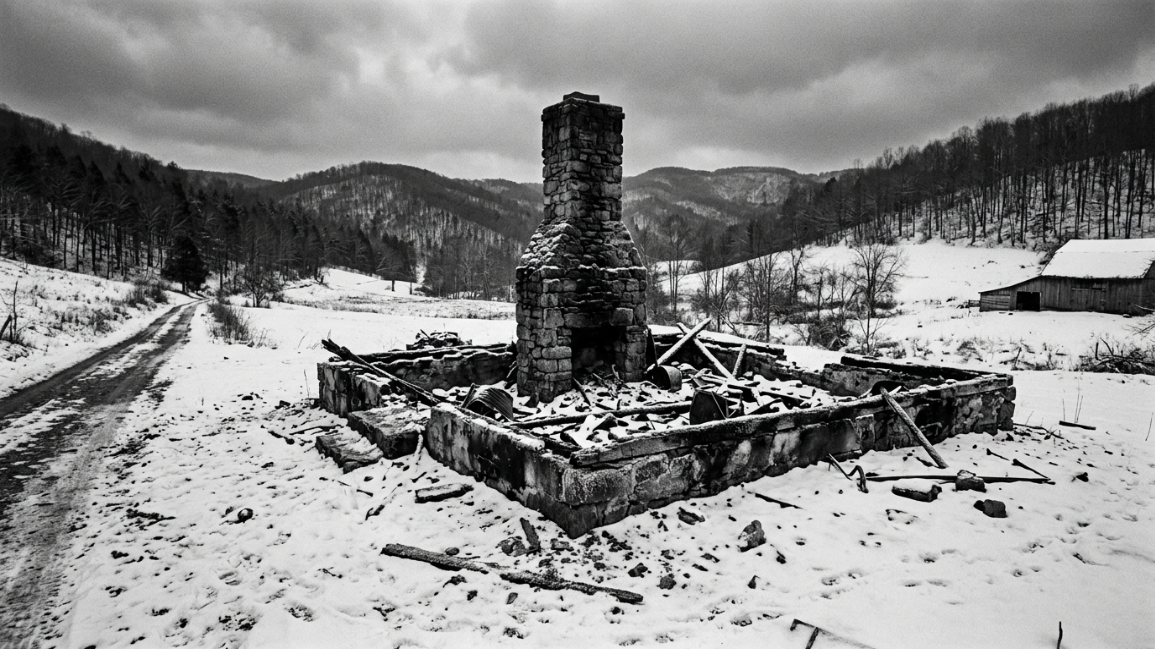
Shortly after midnight on December 25, 1945, fire engulfed the Sodder family home in Fayetteville, West Virginia. George and Jennie Sodder escaped with four of their children, but five others were believed to have remained inside the burning house.
When the fire was extinguished, investigators reported that no identifiable human remains were recovered from the debris.
That conclusion immediately raised difficult questions.
Could an ordinary house fire completely destroy five bodies? Were the children actually inside the home when it collapsed? Or did shortcomings in the original investigation leave important evidence undiscovered?
Although no definitive answer has ever emerged, advances in fire science, forensic anthropology, and archaeology allow investigators to evaluate the physical evidence more critically than was possible in 1945.
Timeline of Events
December 24, 1945
The Sodder family celebrates Christmas at their home in Fayetteville.
Shortly After Midnight
A fire breaks out and rapidly spreads through the house.
Early Morning
George and Jennie Sodder escape with four children while five remain unaccounted for.
December 25, 1945
Officials search the burned structure but report finding no identifiable remains of the missing children.
1949
George Sodder commissions an independent excavation of the site.
Following Decades
Numerous witness reports, photographs, and alleged sightings keep the mystery alive, although none are conclusively verified.
Could the Fire Completely Destroy Human Remains?
One of the central questions in the Sodder case concerns whether the house fire could have completely destroyed the bodies of the missing children.
Modern forensic science suggests that complete cremation of a human body requires sustained high temperatures over an extended period under carefully controlled conditions.
Commercial cremation facilities typically operate between approximately 760°C and 980°C (1,400°F–1,800°F) and maintain those temperatures for well over an hour before bones are sufficiently calcined for final processing.
Residential fires can certainly become extremely hot, particularly after flashover occurs, but temperatures vary greatly throughout a structure and rarely remain uniformly high for prolonged periods.
Forensic anthropologists frequently recover bones and teeth from victims of severe house fires, even when buildings are almost completely destroyed.
This does not prove the missing Sodder children survived the fire.
However, many researchers have questioned whether the original conclusion—that five bodies were completely consumed without leaving identifiable skeletal evidence—is fully consistent with modern fire science.
What Normally Survives a House Fire?
Human bone is remarkably durable.
While prolonged exposure to intense heat can cause bones to crack, shrink, and become fragile, complete destruction of the skeleton is uncommon in ordinary residential fires.
Teeth are especially resistant because tooth enamel is the hardest substance in the human body.
Even after major structural fires, forensic recovery teams often locate fragments of skulls, long bones, vertebrae, or dental remains.
Recovery can be complicated if debris is disturbed before careful excavation, and smaller fragments may be overlooked during emergency searches.
The absence of clearly identified skeletal remains in the Sodder case has therefore remained one of the principal reasons some investigators continue to question the original findings.
At the same time, experts caution that fire scenes vary considerably, making it difficult to draw firm conclusions based on one factor alone.
The 1949 Independent Excavation
Unconvinced by the official investigation, George Sodder arranged for an independent excavation of the property several years after the fire.
During this examination, investigators recovered several human vertebrae from soil that had been used to fill the home’s foundation after the fire.
Subsequent analysis concluded that the bones likely belonged to an older individual rather than one of the missing children.
Reports also indicated that the vertebrae showed little evidence of exposure to intense fire.
Because the fill material had been brought to the property after the fire, researchers suggested the bones may not have originated from the original fire scene.
Although this discovery did not resolve the mystery, it reinforced concerns that the original investigation may not have documented the site as thoroughly as would be expected under modern forensic standards.
4. Pre-Fire Anomalies That Continue to Raise Investigative Questions
Beyond the physical evidence left by the fire itself, investigators have long examined several unusual events reported before and during the blaze. These incidents have fueled decades of speculation, although none has been conclusively linked to the disappearance of the children.
One of the most discussed details involves the home’s telephone line. Early assumptions suggested it had burned during the fire, but later examinations indicated the wire had been cut before the blaze reached it. Reports at the time described tool marks consistent with deliberate damage rather than heat-related failure. If accurate, this would have prevented the family from contacting emergency services during the critical first minutes of the fire.
Another frequently cited anomaly concerns George Sodder’s work trucks. According to family accounts, both trucks failed to start despite having been operational earlier that day. George had intended to use the vehicles to reach the second-floor windows after the ladder could not be located. Whether the mechanical failures resulted from coincidence, cold weather, or deliberate interference has never been established, but the timing remains notable.
Witness statements also introduced additional uncertainty. Several people later claimed to have seen unfamiliar individuals near the property shortly before the fire, while others reported observing children resembling the missing siblings in the days that followed. These reports were investigated to varying degrees, yet none produced evidence sufficient to confirm a kidnapping or identify those involved.
From a forensic perspective, such observations are considered contextual evidence, not direct proof. While they may help generate investigative leads, they cannot independently establish what happened without corroborating physical evidence.
5. Why the Case Remains Officially Unresolved
Modern cold-case methodology places heavy emphasis on distinguishing between what is scientifically supported and what remains speculative. The Sodder case illustrates why this distinction matters.
The fire itself is well documented. The absence of identifiable remains has also been widely discussed and continues to attract attention from forensic researchers. However, the evidence available today is incomplete. Much of the original scene was disturbed before modern forensic standards existed, documentation was limited, and many potential sources of evidence were lost over time.
Several hypotheses continue to be debated:
- The children died in the fire, but their remains were overlooked during recovery.
- The children escaped the house and were abducted.
- The children were removed before or during the fire as part of a planned criminal act.
- Critical evidence was unintentionally destroyed during cleanup and reconstruction.
None of these explanations has been conclusively proven.
Advances in fire investigation have certainly challenged some assumptions made during the original inquiry, particularly regarding bone survival in residential fires. At the same time, forensic science cannot fill every historical gap when evidence has been lost or compromised.
For that reason, the disappearance of the Sodder children remains an open historical mystery rather than a solved criminal case.
Frequently Asked Questions
Were any human remains found in the Sodder house?
During the initial investigation, officials reported finding no confirmed remains belonging to the five missing children. Years later, several vertebrae were recovered during an independent excavation, but forensic examination suggested they likely belonged to another individual and showed no signs of exposure to the house fire.
Can a house fire completely destroy human bones?
Modern forensic research indicates that residential fires generally do not reach or maintain the temperatures required for complete destruction of the human skeleton. Calcined bone fragments and teeth are often recoverable even after severe structural fires, although every fire behaves differently depending on temperature, duration, oxygen supply, and collapse patterns.
Was the Sodder family convinced their children survived?
Yes. George and Jennie Sodder spent decades searching for answers. They pursued independent investigations, followed reported sightings, distributed age-progressed images, and publicly maintained that their five missing children had not died in the fire.
Has the mystery ever been solved?
No. Despite numerous investigations, no definitive evidence has established whether the children died in the fire or disappeared under other circumstances. The case remains officially unresolved.
Editorial Review
Reviewed by: Tobi — Editor
This article has been reviewed for historical accuracy, forensic terminology, clarity, and neutrality. While modern fire science provides important insight into how human remains typically respond to residential fires, the disappearance of the Sodder children has never been conclusively solved. The discussion presented here distinguishes between established forensic findings, documented historical records, and theories that remain unproven.
Conclusion
More than eight decades later, the Sodder children mystery continues to challenge investigators because it sits at the intersection of fire science, missing-person investigations, and historical uncertainty.
Modern forensic analysis has raised legitimate questions about conclusions reached during the original investigation, particularly regarding the expected survival of skeletal remains in residential fires. At the same time, no physical evidence has definitively established that the children survived or were abducted.
As with many historical cold cases, the available evidence allows researchers to identify inconsistencies and evaluate competing explanations, but not to reach a final verdict. Until new evidence emerges, the disappearance of the five Sodder children remains one of the most enduring unsolved mysteries in American history.