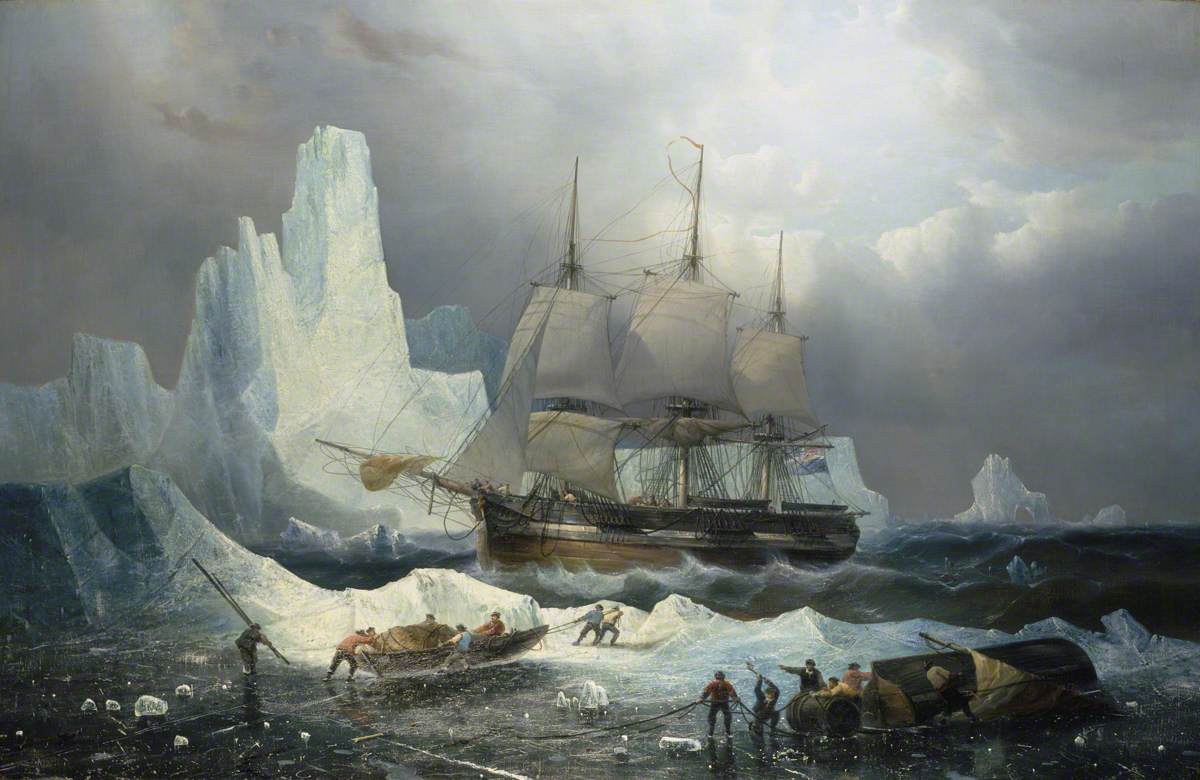
Franklin Expedition Forensic Evidence: 7 Discoveries That Changed History
Introduction
Few historical disappearances have generated as much fascination as the Franklin Expedition. In 1845, Sir John Franklin departed England commanding HMS Erebus and HMS Terror on what was expected to become the greatest Arctic voyage in British naval history. Instead, the expedition disappeared into the frozen Canadian Arctic, leaving behind one of history’s most enduring mysteries.
For more than 170 years, historians, archaeologists, and forensic scientists have attempted to understand what happened to the 129 officers and crew members who vanished while searching for the Northwest Passage. Early theories blamed starvation, harsh weather, or simple navigational failure, but modern scientific investigations tell a far more complex story.
Today, Franklin Expedition forensic evidence combines archaeology, toxicology, DNA analysis, isotope studies, climate science, and historical records to reconstruct the expedition’s final months with remarkable precision. Rather than relying on legend, researchers now examine physical evidence preserved by Arctic conditions to answer questions that once seemed impossible.
Table of Contents
- Why the Franklin Expedition Matters
- The Disappearance of HMS Erebus and HMS Terror
-
- Archaeological Discoveries Changed the Timeline
-
- Human Remains Revealed Signs of Starvation
-
- Toxicology Raised Questions About Lead Exposure
-
- Cut Marks Suggested Extreme Survival Measures
-
- DNA Analysis Helped Identify Crew Members
-
- Shipwreck Discoveries Rewrote History
-
- Climate Science Explained the Arctic Trap
- Conclusion
- Key Takeaways
- Frequently Asked Questions
- Further Reading & Sources
Why the Franklin Expedition Matters
The Franklin Expedition was one of Britain’s most ambitious nineteenth-century exploration projects.
Its objective was to complete the Northwest Passage—a sea route connecting the Atlantic and Pacific Oceans through the Arctic.
The ships never returned.
Search expeditions launched over the following decades uncovered scattered campsites, abandoned equipment, human remains, and Inuit testimony describing starving British sailors traveling across the ice.
These discoveries gradually transformed the expedition into one of history’s greatest vanished history investigations.
The Disappearance of HMS Erebus and HMS Terror
Franklin’s expedition sailed from England in May 1845.
After entering Arctic waters, the ships became trapped in increasingly severe sea ice.
Historical records indicate that by April 1848, both vessels had been abandoned.
The surviving crew attempted an extraordinary overland journey toward the Canadian mainland.
Few traveled far.
Modern archaeology continues uncovering evidence that documents this desperate retreat.
1. Archaeological Discoveries Changed the Timeline
One of the greatest breakthroughs in Franklin Expedition forensic evidence came through systematic archaeological excavations.
Investigators recovered:
- Campsites
- Personal belongings
- Food containers
- Uniform buttons
- Navigation instruments
- Human remains
Every discovery added new information about the expedition’s final movements.
Rather than a single catastrophic event, archaeology revealed a prolonged survival struggle lasting months.
2. Human Remains Revealed Signs of Starvation
Forensic anthropologists carefully examined skeletal remains recovered from several Arctic locations.
The bones displayed evidence consistent with prolonged malnutrition.
Researchers documented:
- Severe weight loss indicators
- Muscle deterioration
- Bone abnormalities linked to nutritional stress
Combined with historical records, these findings confirmed that food shortages became increasingly severe during the expedition’s final stages.
RELATED POST: How Forensic Archaeology Identifies Ancient Human Remains
3. Toxicology Raised Questions About Lead Exposure
In the 1980s, researchers analyzed preserved tissues from crew members buried on Beechey Island.
Laboratory testing detected elevated lead concentrations.
Initially, investigators suspected poorly soldered food cans had contaminated supplies.
More recent research suggests the situation may have been more complicated.
Some scientists believe chronic lead exposure could have affected decision-making, while others argue the detected levels reflected broader nineteenth-century environmental exposure rather than a single poisoning event.
Although debate continues, toxicology remains an important component of Franklin Expedition forensic evidence.
4. Cut Marks Suggested Extreme Survival Measures
Perhaps the most disturbing evidence emerged during detailed examinations of recovered bones.
Forensic specialists documented precise cut marks created by metal blades.
These marks appeared in locations associated with the removal of muscle tissue and joint separation.
Researchers concluded that at least some crew members resorted to cannibalism during the expedition’s final phase.
The conclusion aligned with earlier Inuit accounts that many Victorian investigators had dismissed.
Modern forensic archaeology ultimately confirmed that those eyewitness observations deserved serious consideration.
5. DNA Analysis Helped Identify Crew Members
Advances in ancient DNA technology have opened new possibilities.
Scientists can now recover genetic material from preserved bones and teeth despite more than a century of Arctic exposure.
DNA studies allow researchers to:
- Confirm biological sex
- Compare remains with living descendants
- Distinguish individual crew members
- Improve historical records
As sequencing techniques improve, additional identifications may become possible.
RELATED POST: How Forensic Archaeology Solves Historical Cold Cases
6. Shipwreck Discoveries Rewrote History
For decades, the locations of HMS Erebus and HMS Terror remained unknown.
That changed dramatically.
HMS Erebus was discovered in 2014.
HMS Terror followed in 2016.
The remarkably preserved wrecks contained artifacts that continue providing valuable information about daily life aboard the expedition.
Marine archaeologists continue documenting:
- Navigation equipment
- Personal possessions
- Ship construction
- Food storage
- Crew accommodations
Each artifact contributes another piece to the investigation.
7. Climate Science Explained the Arctic Trap
Climate reconstruction has helped explain why experienced sailors became trapped.
By analyzing:
- Ice cores
- Tree rings
- Historical weather records
- Ocean circulation
Scientists concluded that unusually severe sea-ice conditions contributed significantly to the disaster.
Rather than simple navigational error, the expedition encountered environmental conditions that dramatically reduced its chances of escape.
Conclusion
The story of the Franklin Expedition demonstrates how science continues rewriting history.
What once appeared to be a simple tale of ships lost in Arctic ice has become one of the world’s most comprehensive historical investigations.
Through archaeology, forensic anthropology, toxicology, DNA sequencing, and climate science, Franklin Expedition forensic evidence has transformed speculation into measurable evidence.
Although some questions remain unanswered, each new discovery brings researchers closer to understanding the final journey of 129 explorers who disappeared while attempting to chart one of the world’s last great frontiers.
Key Takeaways
- The Franklin Expedition disappeared in 1845 while searching for the Northwest Passage.
- Archaeological excavations transformed understanding of the expedition.
- Human remains revealed severe starvation.
- Toxicology studies continue investigating lead exposure.
- DNA analysis helps identify crew members.
- Shipwreck discoveries in 2014 and 2016 revolutionized research.
- Climate science explains why the ships became trapped.
Frequently Asked Questions
What happened to the Franklin Expedition?
The expedition became trapped in Arctic sea ice, the ships were abandoned, and all 129 crew members eventually died during attempts to reach safety.
What is the most important Franklin Expedition forensic evidence?
Key evidence includes human remains, archaeological excavations, toxicology studies, DNA analysis, Inuit testimony, and the discovery of HMS Erebus and HMS Terror.
Was cannibalism confirmed?
Yes. Forensic examinations of skeletal remains identified cut marks consistent with butchering during the crew’s final attempts to survive.
Why is the Franklin Expedition still important today?
The investigation demonstrates how archaeology and forensic science continue solving historical mysteries more than a century after they occurred.
Further Reading & Sources
Official Resources
Parks Canada
https://parks.canada.ca/
Royal Museums Greenwich
https://www.rmg.co.uk/
The National Archives (UK)
https://www.nationalarchives.gov.uk/
Canadian Museum of History
https://www.historymuseum.ca/
Academic References
Journal of Archaeological Science
https://www.sciencedirect.com/journal/journal-of-archaeological-science
Arctic (Arctic Institute of North America)
https://arctic.journalhosting.ucalgary.ca/
Polar Record (Cambridge University Press)
https://www.cambridge.org/core/journals/polar-record
Forensic Science International
https://www.sciencedirect.com/journal/forensic-science-international
Editorial Note
This article is based on published archaeological research, forensic anthropology, toxicology studies, and historical records concerning the Franklin Expedition. Where scientific debates remain—such as the extent and impact of lead exposure—they are presented as ongoing areas of research rather than settled fact.